Iran diskuterar att flytta huvudstaden från Teheran

Sedan 2010 har Irans regering övervägt att flytta landets huvudstad bort från Teheran. Anledningarna är flera: Teheran är tätbefolkat, drabbat av luftföroreningar, trafikproblem och risker för jordbävningar. Staden har vuxit snabbt och har nu över 13 miljoner invånare i storstadsområdet.

Skyline of Tehran with Milad tower at sunset.

Frågan har återigen hamnat i fokus under 2025, då president Ebrahim Raisi i oktober uttalade att en flytt är nödvändig på grund av den förvärrade vattenkrisen och Teherans överbelastade infrastruktur. Uttalandet markerade ett ökat politiskt tryck för att agera efter många års stillastående diskussioner.

Förslaget stöddes formellt av parlamentet redan 2010, och ett råd skapades för att undersöka möjliga alternativ. Flytten skulle kunna innebära att regeringsfunktioner flyttas till en annan stad, medan Teheran fortsätter vara landets ekonomiska centrum. En liknande uppdelning finns redan i flera länder, till exempel Sydafrika och Nederländerna.

Några av de städer som diskuterats som alternativ är Isfahan, Qom och Semnan. Hittills har dock ingen konkret flytt skett, och projektet har bromsats av ekonomiska och administrativa hinder. Men 2025 års kris kan bli en vändpunkt i den långdragna processen.

Antarctica political map

The Political Geography of Antarctica

Antarctica is unique among the world’s continents. It has no permanent population, no sovereign government, and no universally recognized national borders. Instead, it is governed by a series of international agreements that regulate how countries may use the land and resources there.

The cornerstone of this system is the Antarctic Treaty, signed in 1959 and in force since 1961. The treaty freezes all territorial claims, bans military activity, and promotes scientific cooperation. More than 50 countries are parties to the treaty, including all major powers.

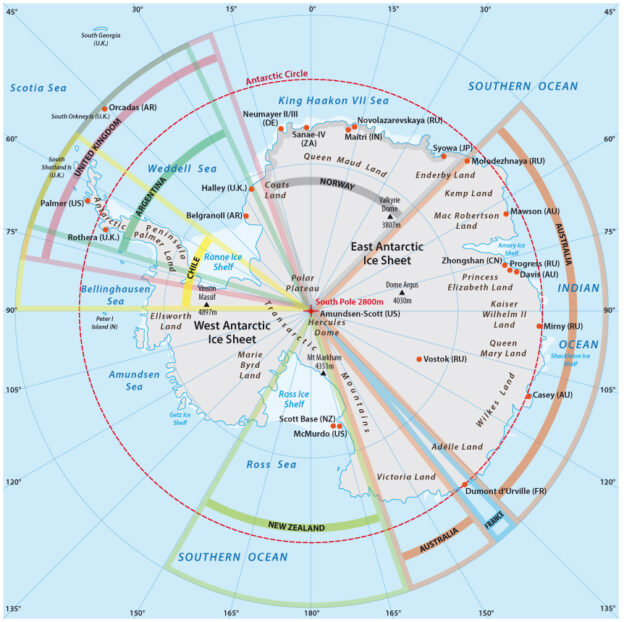
Before the treaty, several nations declared overlapping claims—among them the United Kingdom, Chile, Argentina, Australia, New Zealand, France, and Norway. The United States and Russia reserved the right to make claims but never did. Because of the treaty, these claims exist on paper only and cannot be enforced or expanded.

Antarctica political map
Map of research stations and territorial claims in Antarctica

In practice, this means no country can treat its claimed sector as sovereign territory, for example, by enforcing laws, building military bases, or excluding others.

Today, the continent is divided into research zones rather than political units. Over 70 permanent research stations operate under national programs, but all follow the treaty’s principles. Antarctica thus represents an unusual form of international governance—territory shared for peaceful purposes, dedicated entirely to science.

Massachusetts Is Choosing a New Flag

In 2025, Massachusetts is in the midst of updating its state flag and related symbols. The process began after the Legislature voted to establish a special commission to study the issue and recommend alternatives. The effort aims to create a design that represents all residents, acknowledges the Commonwealth’s history, and is easy to recognize and reproduce. 

The finalist flag proposals

Supporters of change argue that state symbols should reflect shared civic values and avoid imagery that can be read as celebrating colonial violence. They point to modern design standards and the importance of inclusive symbolism in a diverse society. Criticism of the current flag, which dates back to the early 1900s, intensified in the 2010s and led directly to the commission’s creation.

The current flag of Massachusetts

The redesign process in 2025 includes public outreach, submission of design proposals, expert review, and rounds of refinement. Input is being gathered from residents, historians, designers, and representatives of Indigenous communities to ensure the final result is accurate, respectful, and functional.

Common design goals include simplicity, meaningful symbolism, and strong color contrast. Successful flags are identifiable at a distance, printable at small sizes, and workable without text or seals. Symbols that reference the state’s natural features, civic ideals, or historical milestones are often favored.

The redesign process in 2025 has produced three finalist flag proposals. The first design, known as the “Blue Hill Banner,” features a golden star above rolling blue hills and waves, symbolizing Massachusetts’ landscape and maritime heritage. The second design highlights the mayflower, the state flower, with a white blossom on a dark blue background and a central golden star, linking natural beauty with civic identity. The third design presents a deep red field with six white turkey feathers arranged in a circle, referencing Indigenous symbolism and Massachusetts’ status as the sixth state admitted to the Union. 

Once a preferred design emerges, it will move to elected officials for formal approval, most likely in 2026. Implementation would then include updating flag displays at public buildings, revising digital assets, and phasing in changes to official publications and merchandise over the following years.

Residents can participate by following public meetings, reviewing proposed designs, and submitting feedback. Broad participation helps ensure the flag represents the Commonwealth as it is today and stands the test of time.


Transnistria: The Frozen Conflict on Europe’s Edge

Where is it? Transnistria is a narrow strip of land along the Dniester River, right next to Ukraine. Officially it belongs to Moldova, but the region runs its own government from the city of Tiraspol.

What is it? Transnistria calls itself a republic. It has its own flag, army, police, currency, and number plates. Still, almost no countries recognize it as independent. On most maps, it’s marked as part of Moldova.

The flag of Transnistria

How did it start?

When the Soviet Union collapsed in 1991, Moldova became independent. People in Transnistria, many of them Russian-speaking, feared being absorbed into a more Romanian-oriented Moldova. In 1990 they declared their own “Pridnestrovian Moldavian Republic.” Fighting broke out in 1992, but a ceasefire stopped the war that summer. Since then, the situation has been stuck—neither peace nor full war. That’s why it’s called a “frozen conflict.”

Russia’s role

Russian soldiers have stayed in Transnistria since the ceasefire. Some are there as “peacekeepers,” while others guard a massive old weapons depot at Cobasna. This presence ties the region closely to Moscow and creates tension with Moldova and its Western partners.

Recent tensions

From time to time, Transnistrian leaders ask for stronger ties with Russia, saying Moldova is pressuring them. Moldova, on the other hand, insists the region should be reintegrated peacefully. With Russia’s war in Ukraine nearby, these tensions sometimes rise, raising fears the conflict could spread.

Moldova and the EU

Moldova is working to join the European Union. Any deal about Transnistria’s future will have to fit into this larger process. For now, though, the question remains unresolved.

Life in Transnistria

People living there use the local Transnistrian ruble, but often need Moldovan, Russian, or Ukrainian passports to travel. Streets are filled with Russian, Romanian (Moldovan), and Ukrainian languages. Daily life looks fairly normal, but the political status of the region is unusual.

Why it matters

Transnistria may be small, but it sits at a very sensitive spot—between Moldova, Ukraine, and the European Union. What happens there affects the stability of Eastern Europe. As long as the conflict remains frozen, the risk of it unfreezing will always be in the background.

Countries Whose Capital Shares the Same Name

In some countries, the capital city has exactly the same name as the country itself. In other cases, the capital has a closely related name, differing only slightly in form. These naming patterns often reflect the historical origins of the state and the strong role the capital has played in shaping national identity.

Singapore and San Marino

Exact matches

The following countries have capitals that share the exact same name as the country (sometimes with the addition of “City” in English for clarity):

  • Andorra — Andorra la Vella (commonly shortened to Andorra)
  • Djibouti — Djibouti
  • Guatemala — Guatemala City
  • Kuwait — Kuwait City
  • Luxembourg — Luxembourg
  • Mexico — Mexico City
  • Monaco — Monaco
  • Panama — Panama City
  • San Marino — San Marino
  • Singapore — Singapore
  • Vatican City — Vatican City

Near matches

In these cases, the capital’s name is very similar to the country’s, with only a small variation in spelling or form:

  • Algiers — Algeria
  • Brasília — Brazil
  • Santo Domingo — Dominican Republic
  • San Salvador — El Salvador
  • Bissau — Guinea-Bissau
  • São Tomé — São Tomé and Príncipe
  • Taipei — “Chinese Taipei” (Taiwan, Republic of China)
  • Tunis — Tunisia

Together, these examples show how closely the identity of some nations is tied to their capital cities, either through identical names or through slight variations that reflect shared origins.

Learn more about world capitals in our map quiz Capitals of 60 Largest Countries by Population

Useful Resources For Social Studies Teachers

Social studies teachers play a vital role in helping students understand the world around them, from history and geography to civics and economics. To support effective teaching and keep lessons engaging, a wide range of online resources and organizations are available.One key resource is the National Council for the Social Studies (NCSS), which provides teaching materials, professional development, and policy updates. Their website features lesson plans, articles, and guidelines for effective social studies instruction.

Educational websites such as History.com, National Geographic Education, and C-SPAN Classroom offer multimedia content, documentaries, and interactive activities to enhance classroom learning. These resources help bring historical events and global issues to life for students.

For curriculum planning and classroom activities, platforms like Teachinghistory.org, Smithsonian Education, and iCivics provide free, high-quality lesson plans, games, and assessment tools.

Teachers looking to connect with peers and access up-to-date research can benefit from joining online communities and following educational blogs or social media groups dedicated to social studies education.

Recommended Websites for Students

How to Teach World Geography in the Classroom

Teaching world geography gives students an understanding of the world’s physical and political divisions, as well as an appreciation of different cultures and environments. Here are practical methods and strategies for teaching world geography effectively in the classroom.

1. Use Physical and Political Maps

Start with large wall maps or interactive digital maps. Introduce continents, countries, oceans, and major cities. Help students identify important physical features like mountains, rivers, and deserts. Repetition and regular use of maps strengthen students’ spatial understanding.

2. Integrate Map Skills into Lessons

Teach students how to read and interpret maps, including map keys, scale, and coordinates. Regularly practice activities such as finding locations, drawing routes, and comparing distances between places.

3. Use Games and Interactive Activities

Geography games, puzzles, and online quizzes can make learning world geography enjoyable and engaging. Examples include matching countries to their capitals, assembling map puzzles, or participating in classroom geography bees.

4. Relate Geography to Current Events

Use current news stories to introduce and discuss countries and regions. Locating these places on a map helps students connect geography with real-world events and global issues.

5. Combine Geography with Other Subjects

Integrate geography into history, literature, science, and art lessons. For example, when reading about historical events or scientific phenomena, identify the relevant locations on a map to provide context.

6. Encourage Research Projects

Assign students projects on different countries, regions, or geographical features. Presentations, posters, and reports allow students to explore topics in depth and share knowledge with classmates.

7. Use Technology and Online Resources

Digital tools such as Google Earth, interactive atlases, and educational websites offer dynamic ways to explore world geography. These resources can be used for class demonstrations or individual practice.

8. Recommended Websites and Digital Tools

There are many useful online resources to support world geography teaching. Some of the most popular include:

  • Ekvis (ekvis.com) – Offers a wide range of map quizzes covering countries, capitals, states, and more.
  • Sporcle Geography Quizzes (sporcle.com/games/category/geography) – A wide range of timed geography quizzes covering various topics and regions.
  • GeoGuessr (geoguessr.com) – A game where students guess locations based on Google Street View images.
  • Google Earth (earth.google.com) – An interactive globe for exploring the world’s geography, landmarks, and cities in 3D.
  • National Geographic MapMaker (mapmaker.nationalgeographic.org) – Create and explore custom maps with layers for physical and political features.

9. Practice Regular Review

Short, frequent reviews help students retain information. Quick daily map drills, quizzes, or discussions at the start or end of class can reinforce knowledge and highlight areas for improvement.

Conclusion

Teaching world geography in the classroom can be both informative and engaging. By using a variety of methods—maps, technology, games, and cross-curricular connections—teachers can help students build strong geographic knowledge and skills.

Flags with Unique Shapes or Proportions

Most national flags are rectangular and follow common aspect ratios such as 2:3 or 1:2. However, some flags stand out due to their unusual shapes, proportions, or design features. This includes not only national flags, but also flags of subnational entities like states, provinces, and territories.

Nepal – The Only Non-Rectangular National Flag

Nepal’s flag is famous for its unique shape: two stacked triangles forming a double pennant. It is the only national flag that is not quadrilateral. The design represents the Himalayan mountains and includes a sun and a moon, symbolizing permanence and hope.

Switzerland and Vatican City – Square Flags

Both Switzerland and Vatican City have official square flags. Switzerland’s red field with a white cross is widely recognized, while Vatican City’s gold and white vertical bands with the papal insignia make it visually distinct. These square formats are rare among sovereign nations.

Qatar – The Longest National Flag

Qatar’s flag has an official aspect ratio of 11:28, making it significantly longer than most. The maroon and white design with a serrated edge symbolizes Qatar’s heritage and agreements with Britain in the 19th century.

Subnational Flags with Unusual Shapes

Some states and regions also have flag designs that break conventions:

  • Ohio (USA): The only U.S. state with a non-rectangular flag. Its swallowtail (burgee) shape and bold design make it instantly recognizable.
  • In Switzerland, the square format is not limited to the national flag—most of the 26 cantonal flags are also square by tradition. This includes flags like those of Zurich, Bern, and Ticino. However, there are exceptions: the flags of Jura and Valais are usually shown in a rectangular 2:3 format. The square shape is part of Switzerland’s vexillological heritage and contributes to a strong visual consistency in national and cantonal symbols.

Capital Cities That Are Not the Largest in Their Country

In many countries, the capital is also the largest city—like London in the UK or Paris in France. But this is not always the case. In some nations, the political or administrative capital is different from the country’s biggest urban center. This can be due to historical, political, or geographic reasons.

Examples from Around the World

  • Australia: Canberra is the capital, but Sydney is the largest city.
  • Brazil: Brasília was built as a planned capital, while São Paulo is the largest city.
  • Canada: Ottawa is the capital; Toronto is the biggest city.
  • New Zealand: Wellington is the capital, while Auckland is the largest city.
  • Turkey: Ankara is the capital, but Istanbul is by far the largest and most well-known city.
  • Switzerland: Bern is the de facto capital (called the “federal city”), while Zürich is the largest city.
  • USA: Washington, D.C. is the capital; New York City is the largest city.

Why Are Some Capitals Smaller?

There are various reasons why a capital might not be the largest city. Some were chosen for their central location, neutrality, or symbolic significance. Others were created specifically to serve as administrative centers, often to reduce political influence from dominant regions or cities.

Planned Capitals

Several countries have built new capitals from scratch to serve as political centers. Examples include:

  • Brasília (Brazil)
  • Islamabad (Pakistan)
  • Naypyidaw (Myanmar)

These cities were often designed for administrative efficiency and national unity rather than size or economic power.

So while the capital may be where government decisions are made, the largest city is often where the economic and cultural activity is concentrated.

What Is a Country? – Definitions and Grey Areas

At first glance, the concept of a country might seem straightforward. But when you look closer, the definition of what constitutes a country is more complex than it appears. Different organizations, governments, and institutions use different criteria, leading to variations in what is recognized as a country.

Countries and the United Nations

The most commonly accepted list of countries is based on the 193 member states of the United Nations. These are sovereign states that have been formally recognized and admitted to the UN General Assembly. In addition, the UN recognizes two observer states: the Holy See (Vatican City) and Palestine.

States That Function Like Countries

Some territories meet most or all of the criteria for being a country—such as having a defined territory, permanent population, government, and the capacity to enter relations with other states—but are not universally recognized. Examples include:

  • Taiwan: Has its own government and economy but is not a UN member due to pressure from China.
  • Kosovo: Recognized by over 100 UN members but not admitted to the UN due to opposition from countries like Serbia and Russia.
  • Western Sahara: Claimed by Morocco, but also considered a state by some countries and the African Union.

De Facto vs. De Jure States

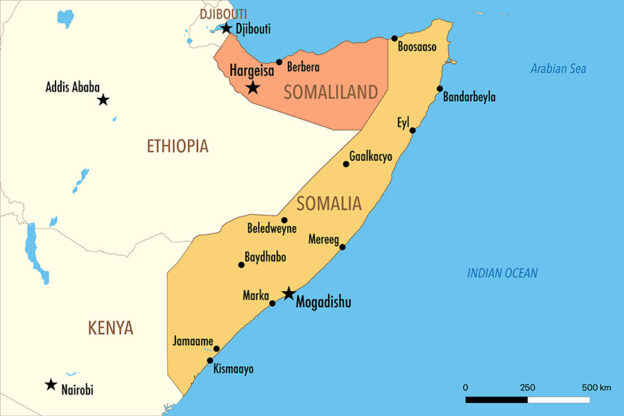
A de facto state functions independently and controls its territory but lacks widespread international recognition (e.g., Northern Cyprus, Transnistria, Somaliland). A de jure state is recognized in law but may not have actual control over its territory, such as Palestine in parts of the West Bank and Gaza Strip.

Dependent Territories and Constituent Countries

Some areas are not considered fully sovereign countries but have a high degree of autonomy. Examples include:

  • Greenland (part of the Kingdom of Denmark)
  • Puerto Rico (an unincorporated territory of the United States)
  • Scotland (a constituent country within the United Kingdom)

How Many Countries Are There?

The answer depends on your definition. Most sources agree on around 195 countries: 193 UN members plus 2 observer states. But if you include partially recognized states and de facto states, the number could be closer to 200 or more.

The question “What is a country?” does not have a single, universally agreed-upon answer. Political, historical, and diplomatic considerations all play a role in how we define and recognize countries around the world.