Category Archives: en

Ekvis Speedrun Contest (June 2025)🏆 #5

🎉 The 5th Ekvis Contest is Here! 🎉

We’re back with a brand new geography contest—this time focused on Asia’s countries! Are you ready to compete?

Contest Dates: June 1st – June 8th, 2025
Map: Countries of Asia. Play here: https://ekvis.com/en/g-asi01/
Game Mode: Pin mode only

Prize: $20 Prize Draw The $20 prize will be randomly drawn among the top five fastest players!

📜 Additional Rules and Info

  • To participate, you must be a member of the Ekvis Discord server.
  • Entries should be posted in the #🏆│contest-entries channel on Discord and must include a YouTube link to your video along with the in-game time shown in the video.
  • The use of macros, autoclickers, or any other external tools is strictly prohibited.
  • Prize money will be paid via PayPal or Swish (for participants in Sweden).
  • Winners will also receive a special role in the Ekvis Discord server as recognition for their achievement.

UN Court Rules in Favor of Equatorial Guinea in Island Dispute with Gabon

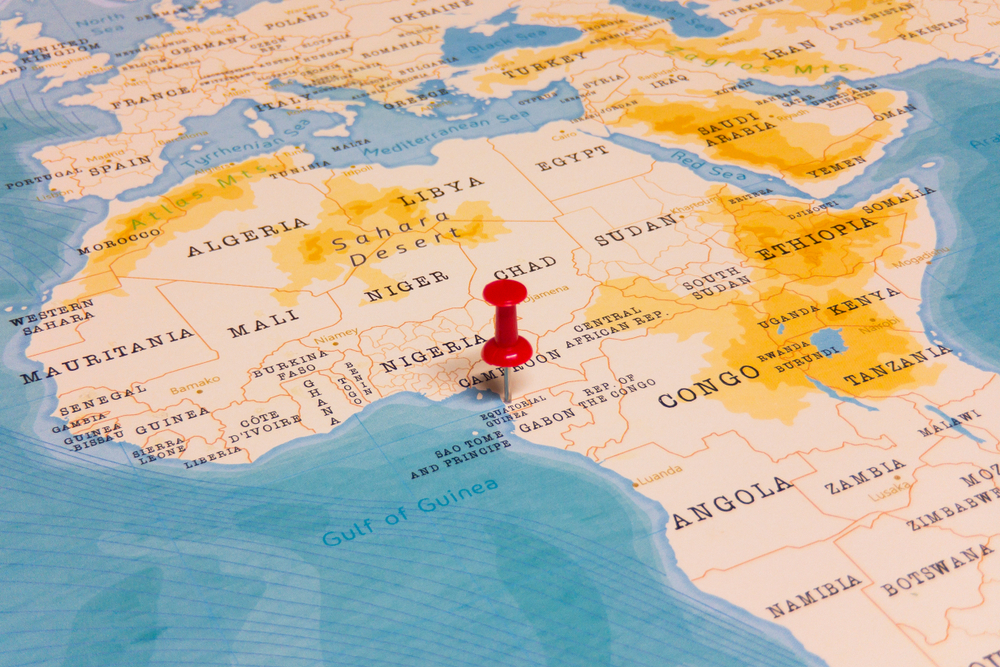
In May 2025, the International Court of Justice (ICJ) ruled in favor of Equatorial Guinea in a longstanding territorial dispute with Gabon over three uninhabited islands—Conga, Mbanié, and Cocoteros—located in potentially oil-rich waters in the Gulf of Guinea.

Background of the Dispute

The conflict dates back to the early 1970s, when both Central African nations laid claim to the islands. The ICJ determined that Equatorial Guinea’s claim, based on a 1900 treaty dividing French and Spanish colonial assets, should be honored. The court dismissed Gabon’s argument that a more recent treaty, the 1974 Bata Convention, had transferred sovereignty of the islands to Gabon.

Implications of the Ruling

As a result of the ruling, Gabon is required to withdraw its military presence from MbaniĂ©, the largest of the three islands, which it has occupied since 1972. The decision is final and binding, and both countries have agreed to abide by the court’s judgment.

Next Steps

Following the ruling, a spokesperson for the Gabonese presidency emphasized the need for continued dialogue between the two nations, stating, “Gabon and Equatorial Guinea have to live side-by-side, we can’t move away from each other. Therefore we will have to talk it over to solve all these problems.”

Oil Exploration Prospects

Both countries are significant oil producers but have experienced declining production in recent years due to underinvestment and aging infrastructure. The resolution of this dispute could open new opportunities for oil exploration in the contested maritime zone.

For more information, visit the BBC News article.

Countries with Two Capitals

Most countries have a single capital city that serves as the political and administrative center. But in some cases, countries divide their capital functions between two cities — sometimes for historical, political, or geographic reasons.

South Africa

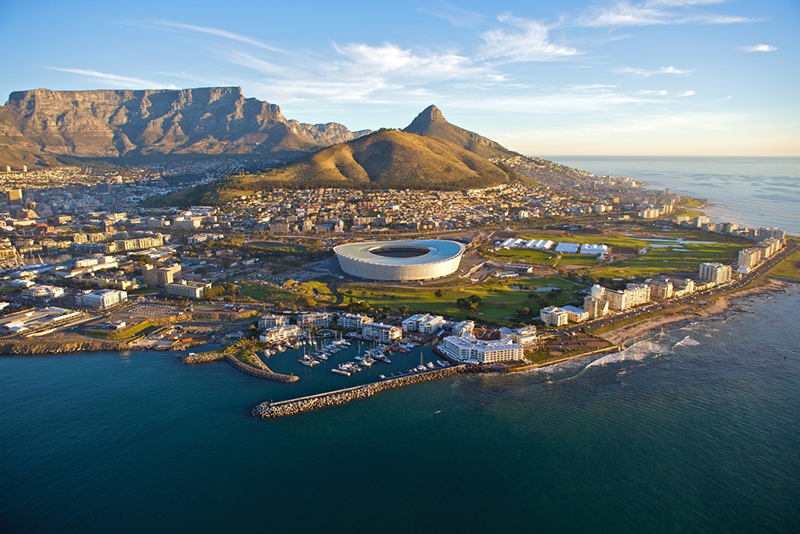
Cape Town, one of the capitals of South Africa

South Africa is the most famous example of a country with three official capitals:

  • Pretoria: Executive capital (home to the president and government ministries)
  • Bloemfontein: Judicial capital (home to the Supreme Court of Appeal)
  • Cape Town: Legislative capital (home to Parliament)

This arrangement reflects the country’s complex political history and efforts to balance power among its regions.

Bolivia

Bolivia has two capitals:

  • La Paz: Seat of government and executive power, including the president and Congress.
  • Sucre: Constitutional capital and location of the Supreme Court.

This split stems from a 19th-century civil war, after which La Paz gained more political influence while Sucre retained symbolic and judicial importance.

Netherlands

The Netherlands also divides its capital functions:

  • Amsterdam: Constitutional capital, where the royal inauguration takes place.
  • The Hague: Seat of government, parliament, Supreme Court, and embassies.

Though Amsterdam is officially the capital, most political activity takes place in The Hague.

Other Examples

Some other countries have cities that share capital functions, even if not officially called “dual capitals”:

  • Benin: Porto-Novo (official capital), but Cotonou is the seat of government.
  • Eswatini: Mbabane (administrative capital), and Lobamba (royal and legislative capital).
  • Malaysia: Kuala Lumpur (official capital), but Putrajaya serves as the administrative center.

Why Split a Capital?

The reasons for having multiple capitals vary. Some countries want to balance power among different regions, others respond to historical compromises or practical concerns like overcrowding. While it may seem inefficient, it often reflects deeper social or political realities.

Independence Years of South American Countries

Throughout the 19th century, most South American countries broke free from European colonial powers, especially Spain and Portugal. The independence movements were inspired by Enlightenment ideals, revolutions in North America and France, and the weakening grip of European empires.

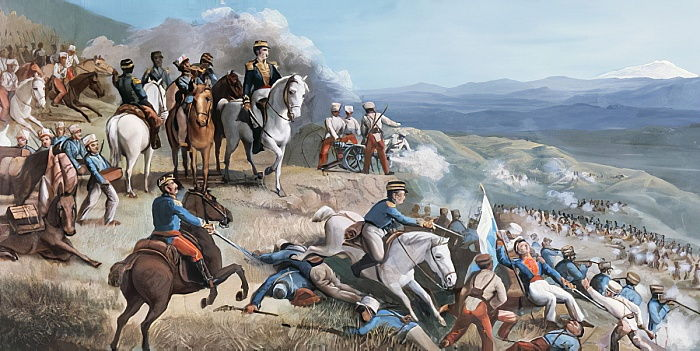
Battle of Ibarra 1823

Timeline of Independence in South America

  • Paraguay: 1811 – Declared independence from Spain.
  • Argentina: 1816 – Formal declaration, though the revolution began in 1810.
  • Chile: 1818 – Official independence after years of struggle.
  • Colombia: 1810 (de facto), consolidated in 1819 under Gran Colombia.
  • Venezuela: 1811 (first declaration), but not secured until 1821.
  • Peru: 1821 – Declared independence, with final liberation in 1824.
  • Ecuador: 1822 – Liberated during SimĂłn BolĂ­var’s campaign.
  • Bolivia: 1825 – Last major Spanish stronghold to fall.
  • Uruguay: 1825 – Declared independence from Brazil; recognized in 1828.
  • Brazil: 1822 – Declared independence from Portugal, peacefully compared to Spanish colonies.
  • Guyana: 1966 – Gained independence from the United Kingdom.
  • Suriname: 1975 – Gained independence from the Netherlands.

Gran Colombia: A Short-Lived Union

Several northern countries, including Colombia, Venezuela, Ecuador, and Panama, were briefly united under Gran Colombia from 1819 to 1831, before fragmenting into separate nations.

Late Decolonization

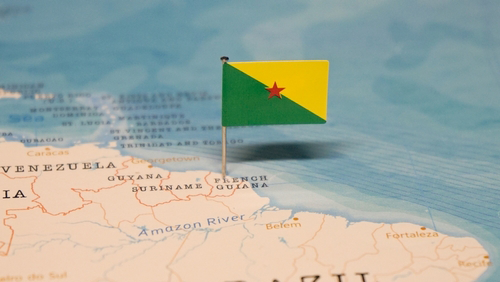
Unlike the Spanish colonies, Guyana and Suriname remained under British and Dutch control until the 20th century. French Guiana remains a region of France to this day and is not an independent country.

A Wave of Change

The independence movements across South America reshaped the continent and created new nations out of old colonial structures. The legacy of these struggles still influences politics, identity, and national pride throughout the region today.

French Guiana: A Piece of France in South America

When you think of South America, you likely imagine countries like Brazil, Argentina, or Colombia. But nestled on the continent’s northeastern coast is a place that doesn’t quite fit the mold: French Guiana. Unlike its neighbors, it’s not an independent country — it’s part of France. Yes, the same France as Paris and the Eiffel Tower.

A Department, Not a Colony

French Guiana is not a colony or overseas territory. It is an overseas department and region of France, fully integrated into the French Republic. This means it uses the euro, participates in French and European elections, and follows French law.

In fact, French Guiana is part of the European Union — making it the only place in mainland South America where EU law applies.

Spaceport in the Jungle

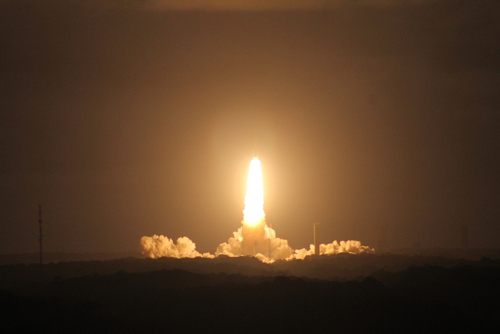
Rocket launch Ariane 5 in French Guiana

One of French Guiana’s most surprising features is the Guiana Space Centre in Kourou. This high-tech facility is used by the European Space Agency (ESA) to launch satellites. Its equatorial location makes it ideal for space missions — making the region a key player in Europe’s space program.

Social Tensions and Protests

Despite its modern infrastructure and official status as part of France, French Guiana faces many challenges. Unemployment is high, public services are often lacking, and many residents feel disconnected from mainland France. Protests in 2017 brought international attention to these issues.

Identity and Belonging

The population is diverse, with Afro-descendants, Indigenous peoples, Creoles, and immigrants from Suriname and Brazil. While some people embrace their French citizenship, others feel that the region should have more autonomy — or even independence.

A Curious Case of Geography and Politics

French Guiana is a geopolitical anomaly: a slice of Europe on the South American continent. It challenges our usual ideas about borders, citizenship, and what it means to belong to a nation. Whether viewed as a strategic asset, a neglected region, or a cultural mosaic, it certainly stands out on the map.

Who Will Be the 51st State? A Look at Real and Imagined Candidates for U.S. Statehood

The United States has had 50 states since Hawaii joined the Union in 1959. But discussions about a potential 51st state have persisted for decades. While some regions are seriously pursuing statehood, others occasionally appear in public discourse through speculation or historical what-ifs. Here’s a look at the most talked-about candidates.

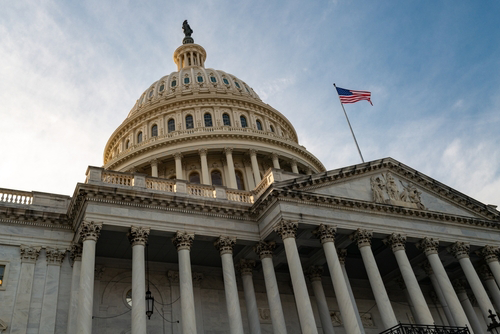
The US Capitol building, home of the US Congress, Washington D.C.

Washington, D.C.

The U.S. capital is perhaps the most prominent candidate for statehood. With over 700,000 residents—more than some current states—Washington, D.C. pays federal taxes but has no voting representation in Congress. Advocates argue this violates democratic principles. Critics cite constitutional concerns and political implications, as D.C. leans heavily Democratic.

Puerto Rico

A U.S. territory since 1898, Puerto Rico has held multiple referendums on statehood. The most recent ones showed increasing support for joining the Union. Puerto Ricans are U.S. citizens but cannot vote in presidential elections and have limited congressional representation. Despite local support, Congress has not taken decisive action.

Other U.S. Territories

Several smaller territories—including Guam, the U.S. Virgin Islands, American Samoa, and the Northern Mariana Islands—also remain outside the statehood framework. These areas have varying levels of autonomy and representation. While statehood is occasionally discussed, none have launched campaigns with momentum comparable to D.C. or Puerto Rico.

Proposals to Split Existing States

Some movements advocate splitting large or politically diverse states to create new ones. Examples include the proposed State of Jefferson (from parts of northern California and southern Oregon) and efforts to divide New York or California along rural–urban lines. These ideas often reflect political discontent but face major legal and constitutional hurdles.

Far-Fetched but Fascinating: Canada and Greenland

Occasionally, more speculative ideas enter the conversation. Canada, for example, has historically appeared in U.S. statehood discussions—especially in the 19th century. Former President Donald Trump even referred to Canada as “the 51st state” in a tongue-in-cheek remark, highlighting the countries’ close economic and cultural ties. Today, such proposals have no serious backing and would be implausible given Canada’s strong national identity.

Greenland briefly made headlines when President Trump suggested the U.S. might purchase it from Denmark. While the idea was dismissed by both Danish and Greenlandic leaders, it underscored Greenland’s strategic importance. Still, the territory is moving toward greater autonomy, not integration with another country.

Conclusion

The most realistic candidates for becoming the 51st state remain Washington, D.C. and Puerto Rico, both of which raise significant questions about representation, identity, and federal power. While other regions and proposals occasionally stir interest, actual statehood requires overcoming major political and constitutional barriers. Until then, the American flag remains at 50 stars.

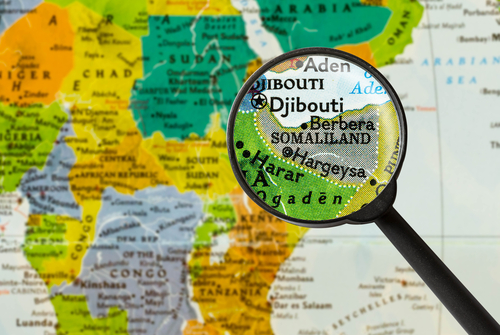
Is Somaliland A Country?

Somaliland is a self-declared independent region in the north of Somalia. It declared independence from Somalia in 1991, following the collapse of Somalia’s central government.

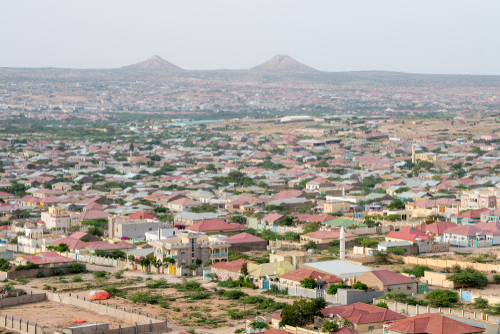
Hargeisa, the capital of Somaliland

Somaliland has its own government, military, currency, and constitution. It holds elections and operates separately from the Federal Government of Somalia, which it does not recognize as having authority over its territory.

For many years, no country officially recognized Somaliland as independent, and the United Nations continued to treat it as part of Somalia. However, in December 2025, Israel became the first country to formally recognize Somaliland as an independent state, marking a major change in its international status.

Many residents of Somaliland strongly identify with their region’s independence and point to its relative stability compared to much of Somalia. Supporters argue that recognition reflects the reality on the ground. At the same time, the long lack of recognition has limited Somaliland’s access to foreign aid, investment, and formal diplomatic relations.

Whether Somaliland is considered a country depends on how statehood is defined. It meets many practical criteria for being a state, but most of the world has not formally recognized it. Even with Israel’s recognition, Somaliland’s status remains one of the world’s unresolved geopolitical questions.

Somaliland on a map

What happened to Yugoslavia?

Yugoslavia was a country in Southeast Europe that existed in various forms throughout the 20th century. It was formed after World War I in 1918 as the Kingdom of Serbs, Croats and Slovenes, later renamed the Kingdom of Yugoslavia in 1929.

After World War II, Yugoslavia became a socialist federation led by Josip Broz Tito. It consisted of six republics: Slovenia, Croatia, Bosnia and Herzegovina, Montenegro, Macedonia, and Serbia. Serbia also included two autonomous provinces: Kosovo and Vojvodina.

Josip Broz Tito

Yugoslavia remained relatively stable during Tito’s rule, but after his death in 1980, ethnic tensions grew. In the early 1990s, several republics declared independence, leading to a series of conflicts known as the Yugoslav Wars.

By 1992, Slovenia, Croatia, Bosnia and Herzegovina, and Macedonia had all become independent. What remained was called the Federal Republic of Yugoslavia, made up of Serbia and Montenegro.

In 2003, this was renamed Serbia and Montenegro. Finally, in 2006, Montenegro voted for independence, and Serbia became a separate country. Kosovo declared independence from Serbia in 2008, though it is not recognized by all countries.

Today, the territory of the former Yugoslavia consists of seven independent countries: Slovenia, Croatia, Bosnia and Herzegovina, Montenegro, North Macedonia, Serbia, and Kosovo.

The Relocation of Indonesia’s Capital: From Jakarta to Nusantara

Smog in Jakarta

Indonesia is in the process of relocating its capital from Jakarta to a newly planned city called Nusantara. This decision was made due to Jakarta’s overpopulation, environmental challenges, and economic considerations. The relocation marks one of the most ambitious infrastructure projects in Indonesia’s history.

Nusantara presidental palace

Reasons for Moving the Capital

Jakarta, located on the island of Java, has long served as Indonesia’s capital. However, the city faces multiple challenges that prompted the government to consider a relocation:

  • Severe Overpopulation: Jakarta is home to over 10 million people, with the greater metropolitan area exceeding 30 million. This has led to chronic traffic congestion and urban crowding.
  • Environmental Concerns: Jakarta is sinking due to excessive groundwater extraction. Parts of the city are subsiding by as much as 25 cm per year, increasing the risk of severe flooding.
  • Economic Imbalance: Java dominates Indonesia’s economy, while other islands remain underdeveloped. Moving the capital is intended to promote economic growth in other regions.

Choosing Nusantara

In 2019, President Joko Widodo announced plans to relocate the capital to East Kalimantan, on the island of Borneo. The new city, named Nusantara, was chosen for its central location, lower population density, and reduced environmental risks.

Construction and Development

The construction of Nusantara officially began in 2022, with plans to complete the first phase by 2024. The key aspects of the development include:

  • Green and Smart City: Nusantara is designed to be environmentally sustainable, using renewable energy and smart infrastructure.
  • Decentralization: The move is expected to distribute economic opportunities beyond Java.
  • Government Relocation: Key government institutions, including the presidential office, are set to move to Nusantara.

Challenges and Criticism

Despite the ambitious plans, the relocation faces several challenges:

  • High Costs: The estimated cost of building Nusantara is around $32 billion, requiring significant investment.
  • Environmental Concerns: Although intended as a sustainable city, some fear that development in Borneo could lead to deforestation and harm biodiversity.
  • Logistical Issues: Moving government offices and infrastructure from Jakarta to Nusantara is a complex and time-consuming process.

Conclusion

Indonesia’s decision to relocate its capital from Jakarta to Nusantara is a historic move aimed at addressing overpopulation, environmental risks, and economic imbalance. While the project presents significant opportunities, it also comes with financial and environmental challenges. The success of Nusantara will depend on careful planning and execution in the coming years.

The Name Changes of Astana: A Capital in Flux

Astana, the capital of Kazakhstan, has undergone multiple name changes throughout its history. These changes reflect political transitions, national identity shifts, and the influence of Kazakhstan’s leadership. Below is an overview of the city’s historical names and the reasons behind each change.

Akmolinsk (1830–1961)

The settlement was founded in 1830 as a Russian military outpost and was named Akmolinsk. The name derives from “Ak-Mola,” meaning “White Shrine” or “Holy Place” in Kazakh, possibly referring to a local burial site or geographical feature.

Tselinograd (1961–1992)

During the Soviet Union’s Virgin Lands Campaign, aimed at increasing agricultural production in northern Kazakhstan, the city was renamed Tselinograd (from the Russian “Tselina,” meaning “virgin lands”). This renaming emphasized the city’s role in the large-scale Soviet agricultural project.

Akmola (1992–1998)

After Kazakhstan gained independence in 1991, the government sought to restore Kazakh identity to place names. In 1992, the city reverted to a variation of its original name, Akmola, aligning with the country’s move away from Soviet-era names.

Astana (1998–2019)

In 1997, Kazakhstan’s capital was moved from Almaty to Akmola, primarily due to Almaty’s geographic limitations and earthquake risk. In 1998, the city was renamed Astana, which simply means “capital” in Kazakh. The name was chosen to avoid favoring any particular historical figure or political ideology.

Nur-Sultan (2019–2022)

In 2019, after the resignation of Kazakhstan’s long-time president Nursultan Nazarbayev, his successor, Kassym-Jomart Tokayev, proposed renaming Astana to Nur-Sultan in his honor. This change was quickly approved, marking the city’s most politically motivated renaming. However, it faced public opposition, as many residents preferred the neutral name “Astana.”

Return to Astana (2022–Present)

In September 2022, following public dissatisfaction and political shifts, President Tokayev signed a decree restoring the city’s name to Astana. This decision was part of a broader effort to distance the country from excessive political leader worship and to reflect the population’s preference.

Conclusion

Astana’s name changes mirror Kazakhstan’s historical and political transformations. From its early days as Akmolinsk to the present, each renaming reflects a shift in national priorities, governance, and public sentiment. Whether the name remains “Astana” or changes again in the future remains an open question, but the city’s evolving identity will continue to be closely tied to the nation’s political landscape.