Category Archives: en

What Is An Exonym?

An exonym is a name used in one language or culture to refer to a geographic location (a city, country, region, or natural feature) situated within a different language area or cultural context. In other words, it is how people outside a place name it, rather than the name used locally by the inhabitants themselves.

For example, in English we say “Germany” for what Germans call “Deutschland,” and “Florence” for the Italian city known locally as “Firenze.” Those English names are exonyms. Meanwhile, the endonym (or autonym) is the name in the region’s own language—like “Deutschland” or “Firenze” in those two examples.

Exonyms arise for several reasons. Sometimes they reflect older historical names carried through centuries of trade and travel. In other cases, they are the result of different sounds and spelling conventions in the adopting language. While exonyms can provide familiarity and ease of pronunciation for speakers of a particular language, modern usage trends may lean more toward using local (endonymic) spellings or pronunciations, especially when respect for cultural or linguistic identity is a priority.

Game Modes

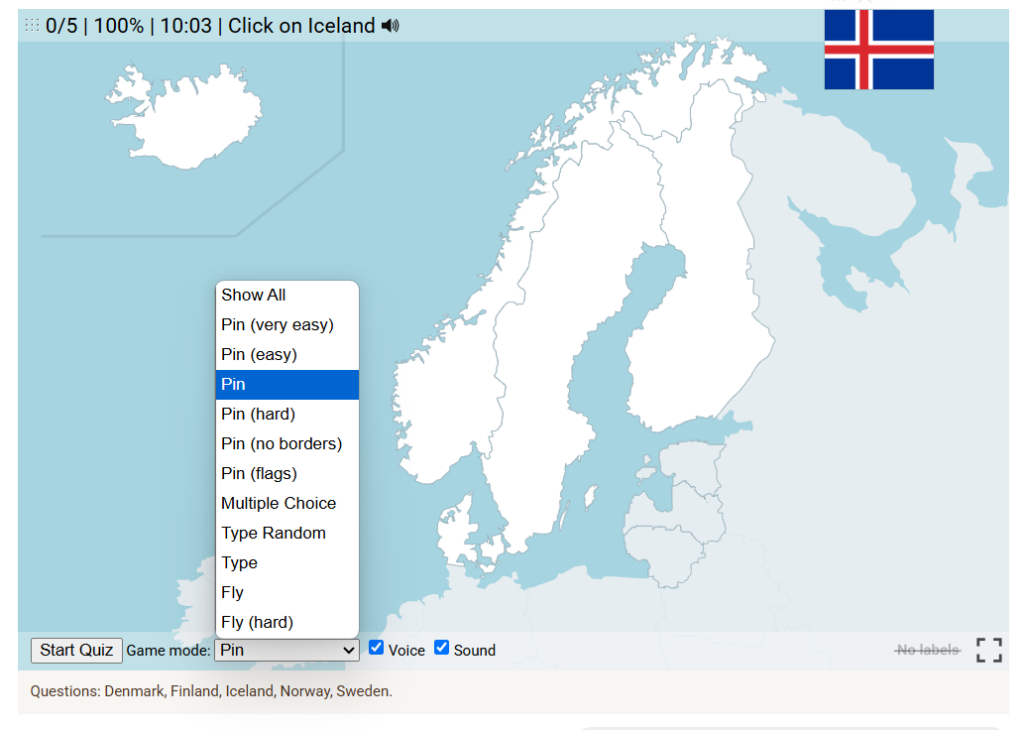
Our geography games on the Ekvis website offer a variety of game modes. Use the dropdown below the map to select a different mode and explore new challenges!

Show All: A learning mode where all locations are displayed on the map, allowing you to study and familiarize yourself with them.

Pin: Click on the exact location you’re prompted to find.

Pin (easy): Similar to ‘Pin,’ but three possible areas are highlighted, making it easier to choose the correct one.

Pin (very easy): Similar to ‘Pin,’ but as you hover over locations, their names are displayed to assist you.

Pin (no borders): Similar to ‘pin’, but the borders between countries are not visible, making the game a lot more challenging! (This is not available in city quizzes).

Muitiple Choice: Choose between four alternative names.

Type random: Type the names in any order, and they will be highlighted on the map as you go.

Type: Type the name of the highlighted country.

Fly: Use the arrow keys or WASD to steer, and press the spacebar for a speed boost.

Why Did Canada Not Become Part of the United States?

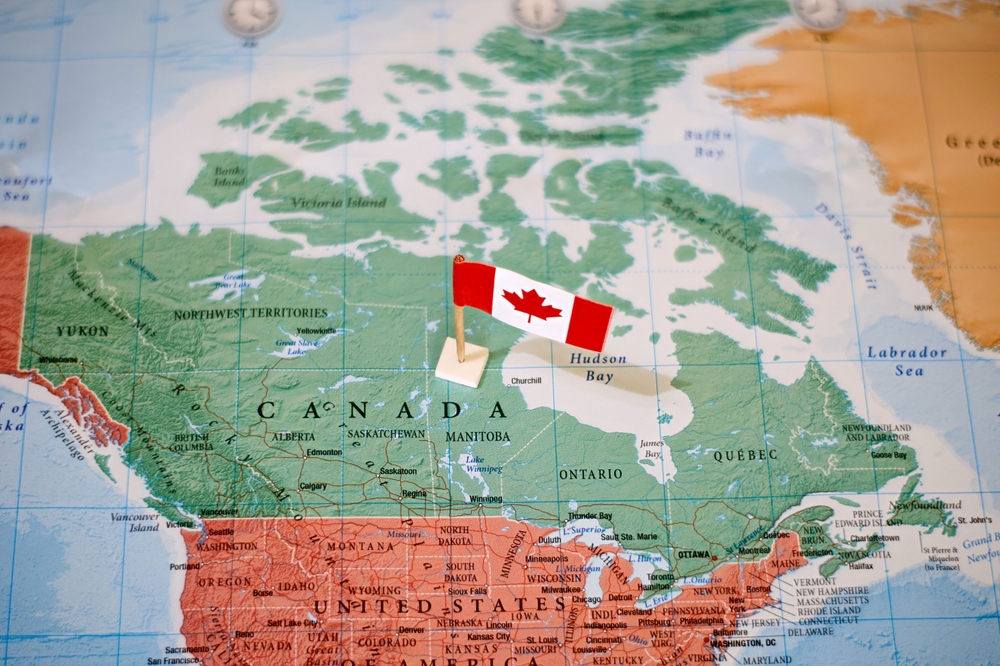
Despite their shared geography, language, and historical connections, Canada and the United States developed as separate nations. Several key factors explain why Canada did not join the U.S.:

1. Loyalist Influence After the American Revolution

During the American Revolution (1775–1783), many colonists remained loyal to Britain. These Loyalists (including soldiers, officials, and civilians) fled to British-controlled territories in the north, strengthening their British identity. This deepened the divide between the new United States and what would become Canada.

2. The War of 1812

The U.S. attempted to invade British North America (now Canada) during the War of 1812, hoping to expand its territory. However, British troops, Canadian militias, and Indigenous allies successfully resisted American forces. This conflict reinforced a Canadian identity separate from the U.S. and increased loyalty to Britain.

3. Cultural and Political Differences

Canada remained under British rule longer and developed a government based on British parliamentary traditions. The U.S., in contrast, embraced a republican system with elected leaders and no ties to the monarchy. These differences created a distinct political and cultural identity for Canada.

4. Economic and Military Ties to Britain

Throughout the 19th century, Canada benefited from economic and military support from Britain. The British government invested in Canadian infrastructure, such as railways, and provided military protection. This support made merging with the U.S. less attractive.

5. Fear of American Expansionism

During the 19th century, the U.S. followed a policy of Manifest Destiny, seeking to expand westward. Many Canadians feared that joining the U.S. would mean being absorbed into an expansionist country that might not respect their existing rights and institutions.

6. The Formation of Canada (1867)

Instead of joining the U.S., the colonies of British North America united to form the Dominion of Canada in 1867 under the British North America Act. This move was partly to strengthen the region against potential U.S. expansion and to establish a self-governing nation under British influence.

Conclusion

Canada remained separate from the U.S. due to a combination of historical loyalty to Britain, military conflicts, cultural differences, economic ties, and concerns over American expansion. Instead of joining the U.S., Canada developed its own path, eventually becoming a fully independent country while maintaining ties to Britain.

Which Country Does Crimea Belong To?

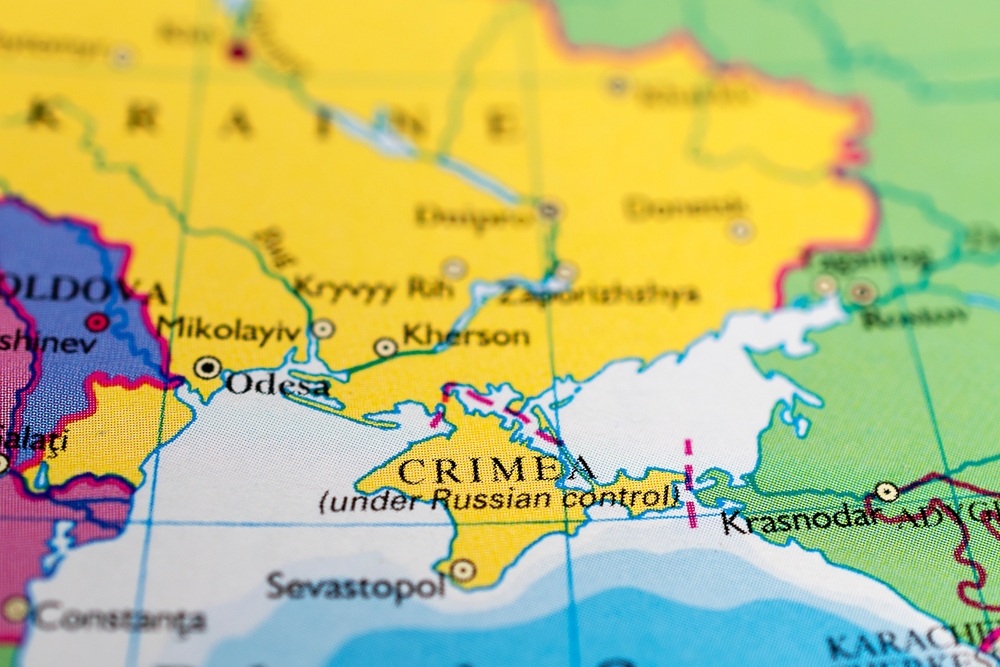
Crimea map Russia Ukraine

Crimea is a region that has been at the center of international disputes in recent years. Officially, according to international law and the majority of the global community, Crimea is part of Ukraine. However, since 2014, it has been under Russian control following a disputed referendum and subsequent annexation by Russia.

Ukraine’s Claim

Crimea was an autonomous republic within Ukraine before 2014. The United Nations and most countries continue to recognize it as Ukrainian territory, citing Ukraine’s internationally recognized borders. Ukraine considers Russia’s presence in Crimea an illegal occupation.

Russia’s Claim

Russia, on the other hand, argues that the 2014 referendum—where a reported majority of Crimeans voted to join Russia—justifies its control. However, this referendum is widely regarded as illegitimate due to the presence of Russian military forces and the lack of international oversight.

International Response

Most countries, including the United States and the European Union, do not recognize Crimea as part of Russia and have imposed sanctions on Russia for the annexation. A few countries, such as Belarus and North Korea, acknowledge Russian sovereignty over the region.

Conclusion

While Crimea is de facto controlled by Russia, it remains de jure part of Ukraine under international law. The issue continues to be a major point of tension in global politics.

Ekvis Speedrun Contest (March 2025)🏆

🎉 The Third Ekvis Contest is Here! 🎉

Following the success of our previous competitions, we’re thrilled to introduce the next geography speedrunning contest!

📅 Contest Dates: March 1st – March 8th, 2025

🗺️ Map: 193 UN Member States (any language)

🎮 Game Mode: Any mode you like!

⚠️ Important: If you play in Type Random or Multiple Choice using the keyboard, you must have a webcam on your keyboard.

👉 Play here

🏆 Prizes

Fastest Time – $20
A $20 prize will be awarded to the contestant with the fastest completion time.

Fastest Time in a Different Game Mode – $20
A $20 prize will be awarded to the contestant with the fastest time in a different game mode than the first-prize winner.

📜 Additional Rules and Info

  • To participate, you must be a member of the Ekvis Discord server.
  • Entries should be posted in the #🏆│contest-entries channel on Discord and must include a YouTube link to your video along with the in-game time shown in the video.
  • The use of macros, autoclickers, or any other external tools is strictly prohibited.
  • Prize money will be paid via PayPal or Swish (for participants in Sweden).
  • Winners will also receive a special role in the Ekvis Discord server as recognition for their achievement.

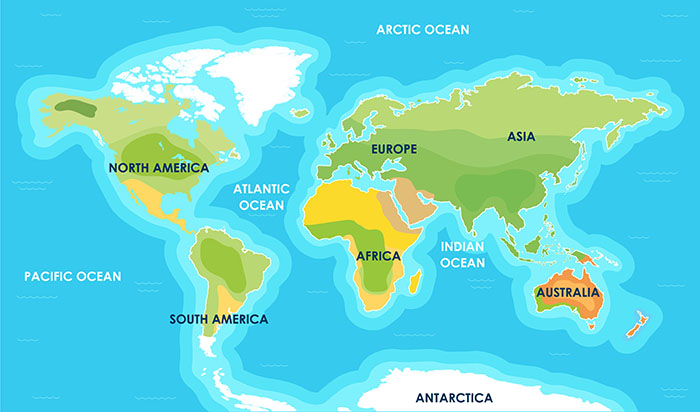
How Many Continents Are There?


The number of continents isn’t as straightforward as it seems—it depends on how a continent is defined. Different cultures and perspectives have led to various models of continental division.

The Most Common Model: Seven Continents

Continents
The seven continent model

 The most widely accepted system, particularly in English-speaking countries, recognizes seven continents:

  • Asia – The largest continent by both area and population.
  • Africa – Known for its vast deserts, rainforests, and diverse wildlife.
  • North America – Home to the United States, Canada, and Mexico, among others.
  • South America – Rich in natural resources and biodiversity.
  • Antarctica – A frozen continent with no permanent human population.
  • Europe – A continent with a rich history of civilization and culture.
  • Australia – Often referred to as both a continent and a country.

This seven-continent model is taught in many parts of the world, including the United States, Canada, the United Kingdom, and Australia.

The Six-Continent Model

Some regions, particularly in Europe and Latin America, follow a six-continent model, which combines certain landmasses differently:

  • Eurasia Model: Europe and Asia are considered one single continent, as they form a continuous landmass without a clear geological separation. This results in the following six continents: Africa, North America, South America, Antarctica, Eurasia, and Australia.
  • America Model: North and South America are treated as a single continent, simply called America, leading to another six-continent model: Africa, America, Antarctica, Asia, Europe, and Australia.

The Five-Continent Model

The Olympic Rings represent five continents: Africa, the Americas, Asia, Europe, and Oceania. This model is mainly symbolic, used in the context of the Olympic Games rather than in geography education.

Other Perspectives

The Four-Continent Model

A minority view groups continents by geological or historical connections, leading to a four-continent system: Afro-Eurasia, America, Antarctica, and Australia.

Tectonic Plate Perspective

Geologists sometimes view continents differently based on tectonic plates rather than traditional landmasses. This perspective leads to various interpretations, such as Zealandia, a mostly submerged continent in the Pacific, which includes New Zealand.

Conclusion

The number of continents varies depending on cultural, geographical, and scientific perspectives. The seven-continent model is the most commonly used, but six-, five-, and even four-continent models also exist. 

Ekvis Map Quizzes Tips And Tricks

Discover a collection of useful tips and tricks to help you get the most out of the Ekvis map quizzes! Whether you’re aiming to improve your geography knowledge, challenge yourself with harder modes, or simply enjoy the experience, these suggestions will guide you in making the most of every quiz. From mastering game mechanics to exploring different modes, there’s something here for everyone looking to level up their skills.

Full Screen Mode

Click the rectangle in the lower right corner of the map to enter or exit full screen mode. You can also press alt+F.

Toggle Labels

Visible labels can be helpful for learning but can also make the screen feel cluttered or make it hard to click objects below them. With Ekvis, you have the option to show or hide labels anytime during gameplay. Simply click the button next to the full-screen icon to toggle them. You can also press alt+A.

Customizing The Interface

You can move the statistics bar and the flag at the top of the map around by dragging the dotted handles. Hide or show the flag by clicking the arrow next to the dotted handle.

Search Function

Don’t forget to take advantage of the search function! It’s a quick and efficient way to locate the quiz you’re looking for. Simply use the search bar located in the header to find your desired quiz in no time.

Switching Language

The map quizzes are available in many different languages. Use the language drop down to switch language.

This quiz is available in both English, German and many other languages, which you can identify by the bolded language names. It is not available in Italian, Romanian and Turkish.

Keyboard Shortcuts

Alt+R: Restart the game
Alt+F: Full screen mode
Alt+A: Toggle labels

Coloring in “Show All” mode

In “Show All” mode, you can color the areas by holding the shift key while clicking.

Dark Mode

Turn on dark mode with the switch in the site footer.

Zooming And Panning

You can zoom the map by holding the alt key while using the mouse wheel. In full screen mode, you can zoon without holding the alt key.

Steering In Fly Mode

In fly mode, use either the arrow keys for steering, or the WASD keys. The space key gives the plane an extra speed boost.

Hold Shift to apply the brake, forcing the speed to minimum while the key is pressed and restoring the previous speed when released. Use the keys 1 to 9 to set the cruise speed directly from minimum to maximum. Press Alt together with 1 to 9 to adjust the turn speed. Press V to reveal the current target, but note that this counts as a penalty.

Linking Directly to Game Modes

You can link directly to game mode by adding a querystring parameter after the link.

Show All: https://ekvis.com/en/g-eur01?gamemode=showall
Pin (very easy): https://ekvis.com/en/g-eur01?gamemode=pinveryeasy
Pin (easy): https://ekvis.com/en/g-eur01?gamemode=pineasy
Pin: https://ekvis.com/en/g-eur01?gamemode=pin
Pin (hard): https://ekvis.com/en/g-eur01?gamemode=pinhard
Pin (no borders): https://ekvis.com/en/g-eur01?gamemode=pinnoborders
Type random: https://ekvis.com/en/g-eur01?gamemode=typerandom
Fly: https://ekvis.com/en/g-eur01?gamemode=fly
Fly (hard): https://ekvis.com/en/g-eur01?gamemode=flyhard

Fastclick

If you are a speedrunner and want to get the fastest time possible, add ?fastclick=1 after the link. Example: https://ekvis.com/en/g-eur01?fastclick=1 . This causes the clicks to register on mouse down instead of mouse up.

Hoverclick

Hoverclick is a challenging and unconventional game mode where your mouse automatically clicks as you move it. You can enable this mode by adding a parameter: https://ekvis.com/en/g-eur01?hoverclick=1

Memorizing The US States Fast

Easily Memorize The 50 States Video

The video titled Easily Memorize the 50 States provides a creative and visual method to help memorize the U.S. states. The presenter, Eric from the Eric the Elephant YouTube channel, adapts and expands on a method he learned, using mnemonic devices and visual cues based on the shapes and positions of the states on a map, similar to Nelson’s video. Here’s a summary of his approach:

  1. Regional Mnemonics:
    • Starts with the southern border states using “can’t” for California, Arizona, New Mexico, and Texas.
    • Uses “nuck” (Nevada, Utah, Colorado, Kansas) and a “K column” for North DaKota, South DaKota, NebrasKa, Kansas, and OKlahoma.
  2. Shapes and Imagery:
    • Washington and Oregon are remembered as “wo” (afraid to walk off the map into the ocean).
    • Idaho as a lowercase “i”; Montana as an upside-down “M” resembling mountain ranges.
    • Wyoming is personified as “why would you forget about me” (a forgotten state).
    • Minnesota becomes “Minnie Mouse,” and neighboring states are linked as “MIMAL” (Minnesota , Iowa, Missouri, Arkansas, Louisiana).
  3. Great Lakes Region:
    • States around the Great Lakes (Wisconsin, Illinois, Indiana, Michigan, Ohio, Pennsylvania) are linked to water and the concept of “mopping”. WII MOP? Because there is a lot of water in the lakes!
  4. East Coast:
    • Uses shapes and features to remember New England states, like a massive hook for Massachusetts and a “y” for New York, h for New Hampshire and V for Vermont.
    • Rhode Island is small because islands are generally small.
    • Connecticut connects Rhose Island and New York.
    • New Jersey looks like a capital J
    • Maryland is associated with water and happiness. They are “merry” because they have so much water.
    • Virginia is an upside-down “V,” and West Virginia is west of it.
  5. Southern States:
    • Kentucky is imagined as a drumstick (Kentucky Fried Chicken).
    • Tennessee is a “long gun barrel”, and more than ten people have guns there, with Mississippi, Alabama, and Georgia as the MAGazine below for loading it.
  6. Final States:
    • North Carolina and South Carolina resemble a “C.”
    • Florida is a backward “F.”
    • Alaska is a lowercase “a.”
    • Hawaii is remembered as “Hi Hawaii” because it’s far off the map.

The video uses humor, imagination, and repetition to create memorable associations for each state, making it easier to learn and recall them.

Do you have a map test coming up and need to learn the 50 states quickly? Don’t worry—there are plenty of tips and tricks to make it easier!

The best tip in this Youtube video by Nelson Dellis is the use of mnemonics and visual associations to memorize all 50 U.S. states. Nelson breaks the map into regions and uses memorable stories and patterns to link state names to their locations. For example:

  1. “Can’t” mnemonic: For southern border states – California, Arizona, New Mexico, and Texas.
  2. “Knuck” mnemonic: For states like Nevada, Utah, Colorado, and Kansas, imagining a duck knocking to get past the border.
  3. Visual shapes: Associating state shapes with objects or letters, such as Oklahoma as a meat cleaver, Idaho as a lowercase “i,” and Montana as mountains.
  4. Storytelling: Grouping states into humorous or imaginative scenarios, such as a chef (Mr. MIMAL) to represent Minnesota, Iowa, Missouri, Arkansas, and Louisiana.

These creative connections make the state names and locations easier to recall by turning abstract geography into fun and vivid mental images.


Tour The States Video

If you need to learn both the states and their capitals, the engaging video Tour the States could be a great resource. In the video, the presenter draws a map and adds symbols for each state along with its capital. Once you’ve memorized the catchy lyrics, you’ll know all 50 state capitals by heart!

Jonas von Essen

Swedish memory champion Jonas von Essen has a great video on learning the 50 states:

Testing Your Knowledge

Test your knowledge of all the states with our US Map Quiz. If you’d like, you can focus on the states east of the Mississippi or the states west of the Mississippi, or the state capitals.

India’s Border Conflicts: A Complex History

India, with its extensive and diverse borders, has faced several long-standing border conflicts with its neighbors, primarily China and Pakistan. These disputes stem from historical territorial claims, political tensions, and strategic interests.

One of the most prominent conflicts is the Kashmir dispute with Pakistan, which began after the partition of British India in 1947. Both countries claim the region in its entirety, leading to multiple wars and ongoing skirmishes along the Line of Control (LoC). The region remains highly militarized and volatile, with frequent ceasefire violations.

India also has border disputes with China, particularly in the areas of Aksai Chin and Arunachal Pradesh. The 1962 Sino-Indian War was fought over these territories, and tensions have persisted ever since. In recent years, clashes along the Line of Actual Control (LAC), such as the 2020 Galwan Valley skirmish, have reignited concerns about stability in the region.

Despite attempts at diplomacy, including talks and agreements, these border conflicts remain unresolved.

Read more on Wikipedia: https://en.wikipedia.org/wiki/Disputed_territories_of_India

> Play our Asia map quiz game to learn all the countries in Asia
> Play our map game on the states of India

Illinois Residents Vote on New State Flag Design

The state of Illinois recently held a public vote on the future of its state flag. Following a statewide design competition and months of anticipation, voters ultimately showed strong support for keeping the current flag.

From January 1 to February 29, 2025, Illinois residents participated in an online vote that included ten finalist designs selected by the Illinois Flag Commission, as well as three historical options: the current Illinois flag, the Centennial flag, and the Sesquicentennial flag. The vote was non-binding, but intended to guide the Illinois General Assembly in its final decision.

A collage of the ten finalist designs in Illinois’ flag competition

On March 6, 2025, Secretary of State Alexi Giannoulias announced the results: the current Illinois flag received 43% of the total 383,000 votes, more than any other individual option. None of the proposed new designs surpassed 10% each. “Some may call it an SOB—a seal on a bedsheet—and the vexillological community may hate it, but people overwhelmingly prefer our current state flag,” Giannoulias wrote on social media.

The results now move to the Illinois General Assembly, which will make the final decision on whether to retain the current flag or move forward with a redesign.

> Read about other US states that have recently changed their flags
> Try our US map quiz game with updated flags